
Panel Capacity That Supports Modern Electrical Demands
Electrical Panel Installation in Concord for properties requiring increased capacity and reliable power distribution
Electrical panels distribute incoming power from the utility service to individual circuits throughout buildings, with properly sized panels rated to handle total connected loads without overheating or voltage drops that damage equipment. New panel installations become necessary during new construction, home additions that add significant electrical loads, renovations that upgrade outdated systems, or service upgrades required to support electric vehicle charging, central air conditioning, or other high-draw appliances. Halion Electric provides electrical panel installation services for homes and businesses throughout Concord where existing panels lack capacity or where new construction requires initial electrical service establishment.
Panel installation involves calculating total anticipated electrical load including appliances, HVAC systems, lighting, and any planned future additions, then installing panels rated with adequate amperage and circuit positions to distribute power safely. Modern panels include space for arc-fault and ground-fault breakers required by current code for specific circuit types.
Request a professional electrical panel installation estimate based on your property's current and anticipated electrical requirements.
What Electrical Panel Installation Actually Accomplishes
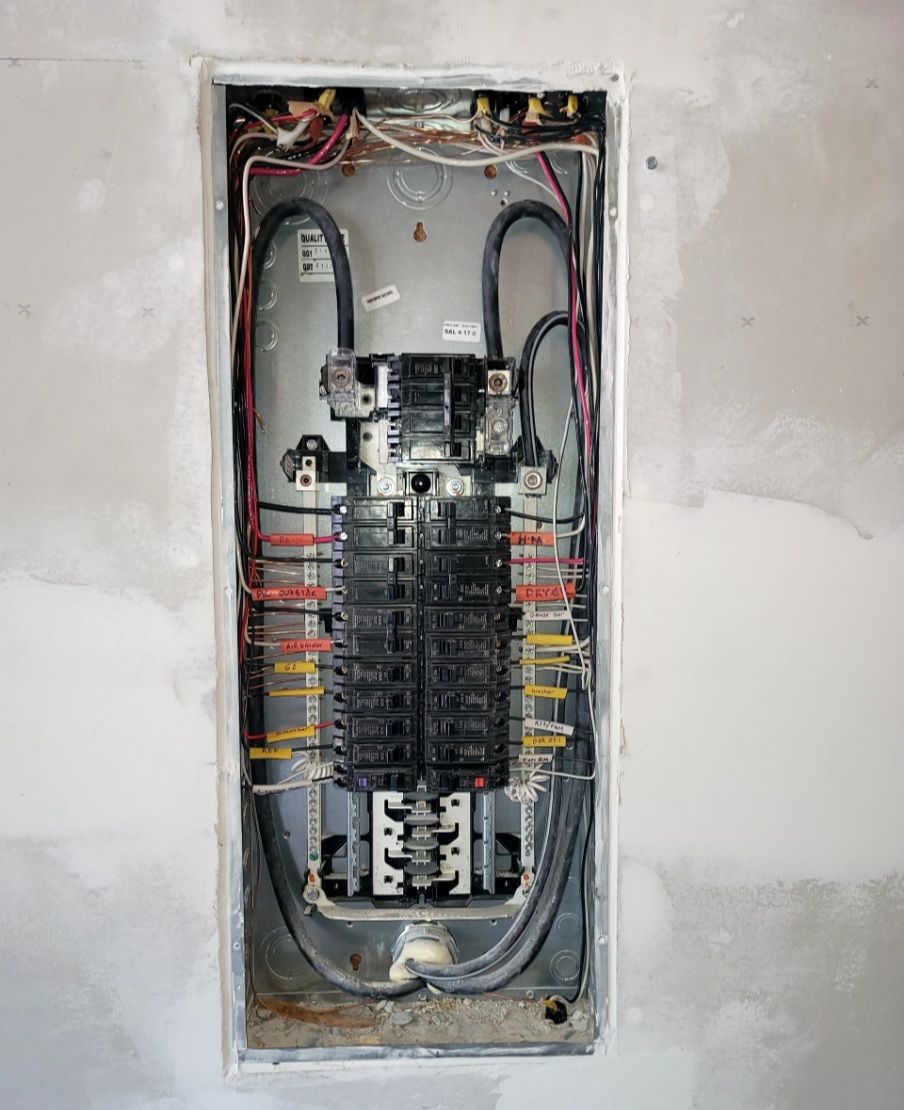
Installation begins with disconnecting existing service if replacing an old panel, mounting the new panel enclosure at the proper height and location, running circuit conductors to their designated breaker positions, and ensuring all connections are torqued to manufacturer specifications to prevent looseness that causes heat buildup. Grounding and bonding connections are established according to code requirements that protect against electrical faults by providing a low-resistance path to earth ground.
Once the new panel is installed and energized, the electrical system supports higher loads without breakers tripping during normal operation, provides space for adding circuits as needs change, and distributes power evenly across phases in commercial three-phase systems to prevent motor and equipment damage from voltage imbalances.
Panel installations also include proper labeling of all circuits so occupants and future electricians understand what each breaker controls, installation of main disconnect breakers that allow the entire panel to be de-energized safely, and documentation of panel rating and installed circuit configuration. Properties with aluminum wiring or Federal Pacific panels may require complete panel replacement due to known safety issues that cannot be resolved through repairs alone.
Questions Before Starting Your Project
Property owners preparing for panel installation often ask about sizing, placement requirements, and how the work affects existing electrical service.
How is the correct panel size determined for a property?
Load calculations sum the wattage of all connected appliances, lighting, and equipment, apply demand factors for loads that do not run simultaneously, and add capacity for planned future additions to determine the minimum panel amperage rating required to supply the property safely.
What happens to electrical service during panel installation?
If replacing an existing panel, the utility must disconnect service at the meter, power remains off during the installation process, and service is restored after the new panel is installed, inspected, and approved by the local authority.
Why do newer panels have more circuit positions than older ones?
Modern electrical codes require dedicated circuits for specific appliances, separate arc-fault protected circuits for living areas, GFCI-protected circuits for kitchens and bathrooms, and individual circuits for high-draw equipment, all of which increase the number of breaker positions needed compared to older installations that shared circuits more extensively.
What code requirements affect panel installation in Concord?
Panels must be installed with adequate working clearance for access, at heights that allow operation without ladders or stools, with proper labeling of all circuits, and with grounding and bonding that meets National Electrical Code standards enforced by local inspection authorities.
How does panel capacity affect property value and future flexibility?
Adequately sized panels with available circuit positions allow property owners to add circuits for renovations, electric vehicle chargers, or upgraded appliances without costly panel replacements, making the property more attractive to buyers who expect modern electrical infrastructure.
Halion Electric installs electrical panels sized appropriately for current loads and future expansion throughout Concord. Schedule a consultation to review your electrical panel installation requirements and receive detailed project specifications.